
LeadPulls builds revenue-engineered websites for ambitious businesses across North America. Premium design, bulletproof SEO foundation, sub-second performance, and conversion systems wired in from the first wireframe. The website is a revenue asset — we build it like one.
We don't ship screenshots of unnamed projects or pretend-client mockups. Below are two live websites we designed and built — visit them, click around, book a ticket, watch the videos. Every number is verifiable against public press and client results.
 Live Site · sherputv.com
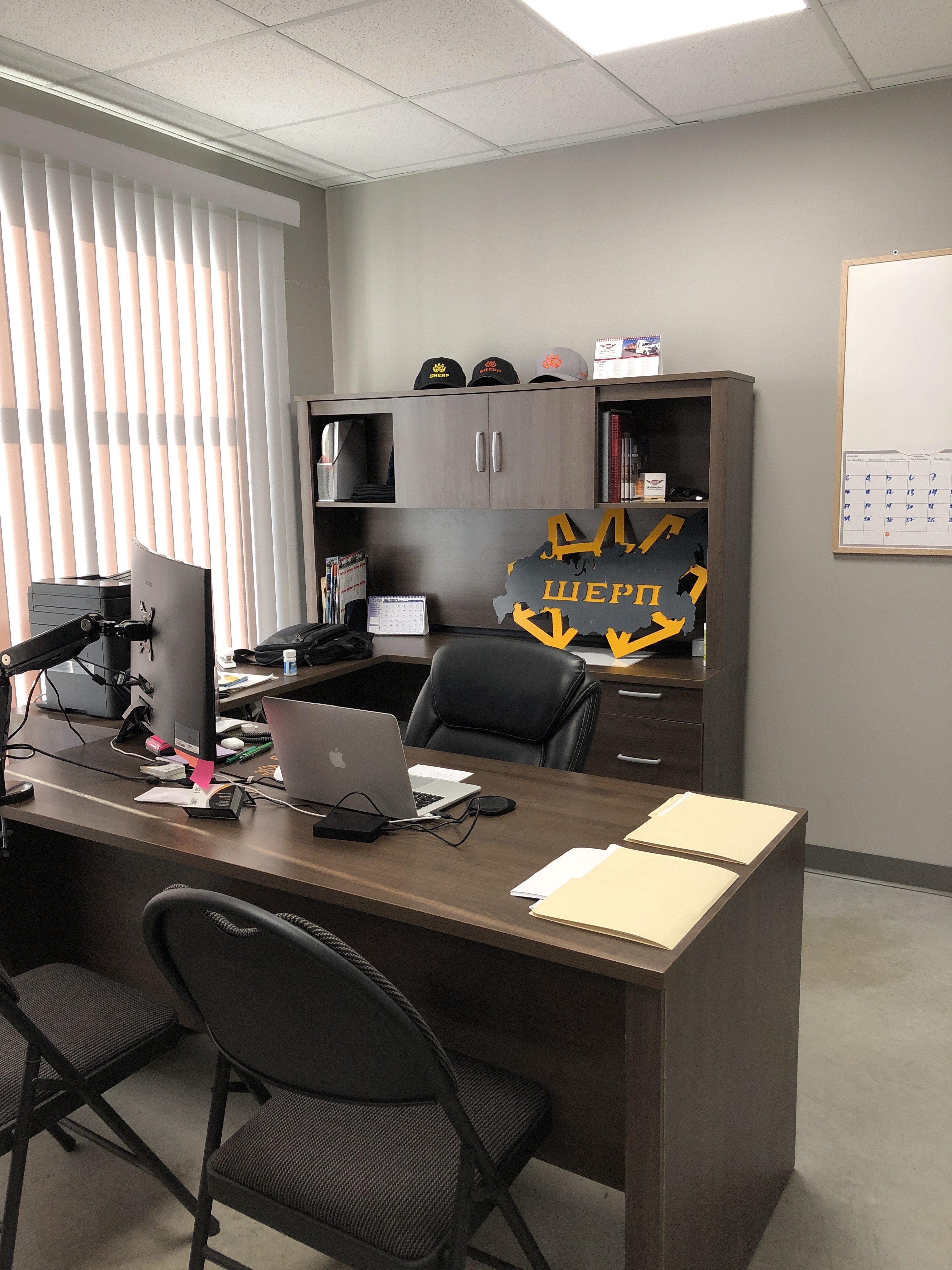
SHERP North America makes the world's most capable amphibious off-road vehicles. When they came to us, they had world-class product and no marketing infrastructure. We built sherputv.com from scratch — positioning, copy, video direction, dealer portal, full technical SEO foundation.
The result: a website that became the digital storefront for $15M+ in equipment revenue, including a $1.5M fleet purchased directly by Kanye West (featured in the "Follow God" music video, his Wyoming ranch, the Chicago Yeezy launch, and a Super Bowl commercial). 40+ dealers signed across North America. $4M+ in sales to Duke Energy alone.
This isn't a landing page. It's a five-year partnership asset that's still producing pipeline today.
Hologram Zoo Illinois is the first permanent holographic zoo in the Chicago region — dinosaurs, space, Africa, all laser-light holograms you walk through at Hawthorn Mall in Vernon Hills. Their previous agency missed the grand opening. Doors open. No bookable website. Foot traffic walking past and leaving.
We took the handoff and shipped a live, bookable website in days — real experiences, real booking flow, real tracking. Then we built the long game: local SEO targeting "things to do Vernon Hills," "indoor attractions near Chicago," "kids birthday party Chicago"; a full birthday funnel with three package tiers; and a content engine producing the hologram video reels that fill seats.
The attraction has since been covered by TIME Magazine (Best Inventions) and Forbes. Birthday bookings are filling weeks out. Revenue climbs every month.
The average marketing website is a museum piece — expensive to build, impressive to look at, quietly failing in the one job that actually matters. The homepage loads in three seconds instead of one. The hero headline leads with a brand slogan instead of a buyer outcome. The forms sit below the fold, past three scroll depths, protected by copy that nobody finishes reading. The SEO foundation is an afterthought bolted on after launch — if it happens at all.
This is the default, and it is the default because most agencies sell design as a product. Pixels delivered. Invoice sent. What happens after launch is somebody else's problem.
The question is not whether a website looks good. The question is whether it moves pipeline.
LeadPulls builds in the opposite direction. Every design decision starts with a commercial question: does this earn a qualified lead, a ranking position, a second page view, a filled form? The aesthetic choices follow the commercial ones — not the reverse. Editorial typography over corporate neutrality because authority out-converts blandness. Navy and orange because restraint reads as confidence. White space because attention is the scarcest resource on the internet and crowding the page destroys it.
The technical layer is the part nobody sees and everyone benefits from. Core Web Vitals tuned to sub-second LCP. Semantic HTML that search engines read cleanly. Schema markup that surfaces the business in AI Overviews and featured answer boxes. Accessibility that passes WCAG 2.2 AA — not because anyone asked, but because the websites that win in 2026 are the ones that are legible to both humans and machines.
The result is a website that looks premium, ranks organically, loads instantly, and produces pipeline on a predictable curve. Not a brochure. An asset.
Every LeadPulls website ships as a complete revenue system — visual design, technical foundation, and conversion scaffolding. No hand-off gaps. No "we'll add SEO later." No surprises six months in.
You see progress every week. Every deliverable is reviewed before the next phase begins. No vanishing acts, no "the design team is still iterating" explanations, no silent months. The timeline is transparent from kickoff to launch.
Stakeholder interviews, competitor audit, buyer journey mapping, conversion benchmark review, positioning clarification. We leave this phase with a documented commercial brief, not a fuzzy Pinterest board.
Information architecture, sitemap, URL taxonomy, page-level wireframes, content hierarchy. Structure before style — because rearranging a wireframe costs nothing, rearranging finished pixels costs weeks.
Mood boards, typography exploration, color architecture, component style tile, hero treatment studies. One focused direction, refined — not four generic options to average together.
Full page designs, interactive prototype, component library, responsive states. You review a clickable prototype on every device before a single line of code is written.
Front-end build, CMS integration, content migration, form wiring, analytics setup, schema markup, accessibility QA, cross-browser testing, performance tuning. Staging environment available from week one of dev.
Pre-launch crawl, 301 redirect mapping, DNS cutover, post-launch ranking monitoring for 60 days, analytics verification, training handoff for your team. Launch day is not the finish line — it's the starting line.
Here's the uncomfortable truth most agencies are still pretending isn't happening: search is fragmenting. Your buyers don't just type queries into Google anymore. They ask ChatGPT "who's the best MSP marketing agency in Toronto?" They ask Perplexity "which web design companies work with med spas in Chicago?" They ask Claude, Gemini, Meta AI, Microsoft Copilot, Google AI Overviews, and Google AI Mode. They get one answer. Either your brand is in that answer — or your competitor is. There is no page two.
Traditional SEO was built for a world where ten blue links fought for a click. That world is ending. In the new model, the AI reads the web, synthesizes an answer, and names one or two brands by default. If your website isn't structured for a machine to extract, quote, cite, and recommend you — you don't exist to the 40% of your buyers who now ask an AI first.
We don't optimize websites to rank. We optimize them to get quoted.
This is what we actually do. Every LeadPulls website ships with the infrastructure LLMs need to understand, trust, and recommend your brand. Structured data and JSON-LD schema so the machine knows what type of business you are, who you serve, and where you operate. Entity-based optimization so your brand becomes a recognized node in the knowledge graphs that ChatGPT, Perplexity, and Gemini pull from. Semantic HTML and question-shaped headings so your content is extractable as direct answers to buyer queries. Citation-ready content architecture — the kind of plain-language, fact-dense passages that AI systems preferentially quote over marketing fluff.
Then we go harder. We build the off-site signals too. Authoritative mentions across the sites LLMs trust — trade publications, Wikipedia-eligible citations, press coverage, high-reputation directories. llms.txt files that tell AI crawlers exactly which pages to index and how to describe you. Structured FAQ and Q&A content designed to match the shape of the questions real buyers ask AI tools. And we monitor it — we track which AI engines are citing you, which queries you show up for, and which ones your competitors still own.
The old SEO game was about keywords. The new one is about becoming the answer. If you want your brand to be the one ChatGPT names when someone asks for a recommendation in your industry, you need a website engineered for it. That's what we build.
The bottom line: we build websites that get quoted, cited, and recommended by every major AI search engine on the internet. Not because we chase trends, but because the trend is the terminal state of search. The brands that get this right in the next 18 months will own their categories for the next decade. The ones that don't will spend that decade wondering why their pipeline dried up.
| Phase | What You Receive |
|---|---|
| Strategy | Commercial brief, competitor audit, positioning doc, sitemap, buyer journey map |
| Design | Interactive prototype, component library, style guide, mobile and desktop states, brand visual system |
| Development | Staging environment, production build, CMS configured, forms integrated, full codebase handoff |
| SEO | Schema JSON-LD, technical SEO audit, URL mapping, redirect plan, meta and OG setup, XML sitemap |
| Analytics | Full tracking stack configured — page events, conversion goals, session recording, custom dashboard |
| Accessibility | WCAG 2.2 AA audit, color contrast report, keyboard nav verification, ARIA implementation |
| Performance | Lighthouse report, Core Web Vitals baseline, image optimization, caching configuration |
| Handoff | Editor training, documentation, 60-day ranking monitoring, support runway |
We engineer websites around a single metric: qualified pipeline. Every design decision — from hero copy to form placement to page speed — is tied to conversion outcomes. We do not ship aesthetic pages that fail commercially. Every build ships with SEO technical foundation, Core Web Vitals tuning, and analytics wired in from day one.
Most conversion-focused builds ship in 4 to 8 weeks. Landing page sprints take 7 to 14 days. Enterprise builds with custom integrations, multi-location schema, or headless architecture run 8 to 16 weeks. Timeline depends on content readiness, stakeholder approval cycles, and scope — not on our side of the equation.
Ranking is baked into the build, not bolted on after. Every page ships with proper schema markup, semantic HTML, internal link architecture, optimized Core Web Vitals, mobile-first responsive structure, and content surfaced for AI Overviews, AEO featured answers, and GEO citations. SEO is the foundation — the design sits on top of it.
We select the platform based on the commercial brief — content velocity, performance requirements, integration depth, editorial workflow, and the team who will manage the site post-launch. We do not push a single stack on every client. The platform is a tool. The outcome is the product. We walk you through the platform decision during discovery so you understand exactly why we are recommending what we are recommending.
Six phases: discovery and positioning audit, information architecture and wireframe, visual direction and brand application, component design and prototype, development and CMS build, QA and launch with analytics wired. You see progress weekly. No black box. No silent stretches.
Landing page sprints start at $3,500 USD. Conversion-focused marketing websites range from $12,000 to $35,000 USD. Enterprise and multi-location builds run $40,000 USD and up. Pricing scales with scope, integrations, and custom development — not with page count.
Yes. Every migration includes a full crawl audit, URL mapping with 301 redirects, schema continuity, content equity preservation, and post-launch monitoring for ranking drift. Most clients maintain or improve rankings inside 30 to 60 days post-launch because the new build is technically cleaner than what it replaced.
LeadPulls delivers web design across North America remotely, with active client work and local SEO coverage in the following markets. If your city isn't listed — we still ship anywhere in the US and Canada.
We will review your current website, walk through your commercial goals, and flag the three highest-leverage improvements we would make in the first 30 days. If a rebuild is the wrong move, we will tell you. If it is the right move, we will show you exactly what it looks like.
— Lester & the LeadPulls team
30 min · No pitch · Practical feedback
We will review your current site, identify the three highest-leverage improvements, and give you a straight answer on whether a redesign is the right move. No deck. No pressure.